

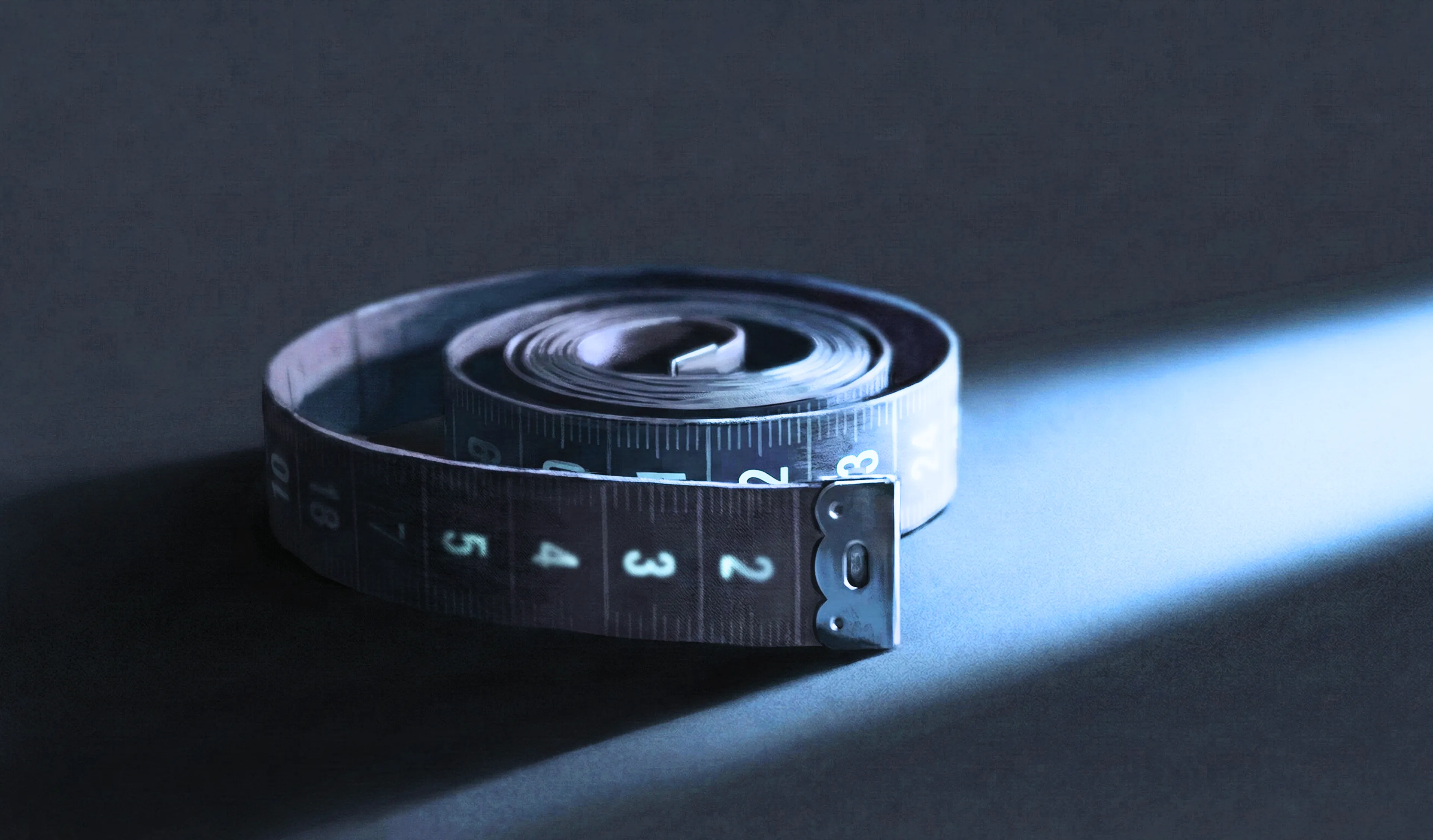
You clicked on this because you want a bigger dick.
I get it. I'm not going to lecture you. I'm not going to tell you to love yourself. I'm a urologist — I specialise in this stuff. And I want to tell you about a patient I saw last week.
The short answer
Most men who ask this question have a penis of normal size. A 2020 systematic review of 17 studies, covering more than 1,100 men seeking enlargement, found the great majority measured within the normal range.
Nothing you swallow, stretch or rub will make it bigger, and surgery only works on anatomy. Satisfaction after augmentation was 35% overall and 27% among men with dysmorphic disorder, and the European Association of Urology’s 2023 guidance is that men of normal size seeking augmentation must be referred for psychological assessment first. The studies behind both figures are set out in “The Research on Surgery Outcomes” further down this page.
What does help is treating the distress rather than the measurement. After structured counselling, most men decline surgery — not because they were talked out of it, but because the problem turns out to be a treatable one they had misnamed.
You do not have to do anything about your size, and for most men that is the right answer. The rest of this page explains why, sets out the alternatives including doing nothing, and describes how to tell whether yours is the uncommon case that needs a physical assessment.
Does penis size matter?
The calmer, science-first companion: what the evidence actually says about size and sex — for all bodies and partners.
"I want you to check my size"
He was in his late twenties. Well-dressed. Articulate. He sat down and got straight to the point:
"I want you to measure my penis and tell me if it's normal."
Fair enough. But before I examine anyone, I ask questions. So I asked him:
How often do you think about your size?
Every day. Multiple times a day.
Have you measured yourself?
Yes. Hundreds of times. He knew the number to the millimetre.
Have you tried anything to change it?
Exercises. Pumps. He'd researched surgery. He'd nearly booked a consultation abroad for a procedure he'd seen on Instagram.
How is this affecting your life?
He'd stopped dating. Stopped going to the gym — couldn't face the changing room. He'd turned down a job that involved travel because he couldn't handle the idea of shared accommodation.
I listened. Then I examined him.
And within seconds, I had a diagnosis.
I diagnosed a medical condition
This might surprise you. You probably expected me to say "everything's fine, stop worrying."
I didn't.
I'd identified a recognised pathological condition — one that sits within what we call penile-focused body dysmorphic disorder, sometimes referred to in older literature as "small penis syndrome." It's classified under obsessive-compulsive and related disorders in the DSM-5, and it's more common than most people realise.
I didn't dismiss this man. I didn't tell him it was all in his head. I took it seriously — because it is serious. This condition was destroying his life.
So I did exactly what he asked.
The 98th percentile
I took out a tape measure. I measured him — using standardised, bone-pressed erect measurement, the same method used in population studies. And I walked him over to the nomogram on my wall — the chart based on data from over 15,000 men that shows the full distribution of penis sizes.
I pointed to where he sat on that chart.
98th percentile.
I explained what that meant: if you lined up 100 men at random, he would be the third largest.
He wasn't surprised
Here's what got me.
He didn't look shocked. He didn't say "really?" He just nodded. Took it in. Looked at me with a kind of tired honesty.
And something came out of my mouth before I could stop it:
"I imagine in about an hour, you'll have the tape measure out again. Am I right?"
He didn't hesitate.
"Yes."
This is what I need you to understand
That moment — that "yes" — is the whole point.
This man had just been shown, by a consultant urologist, with a medical chart, using standardised measurements, that he was bigger than 97% of the male population.
And he knew — he knew — that it wouldn't be enough.
Penile dysmorphic disorder has nothing to do with the size of your penis. It's a condition where the brain becomes convinced of something that isn't true, and no amount of evidence can shift it. The problem isn't lack of information — he'd seen the chart, he knew the numbers. The problem is that his brain rejects the evidence.
That's not a penis problem. That's a brain problem.
And if you're reading this, searching for ways to get bigger, comparing yourself to what you've seen online, measuring yourself again and again and never believing the number — I need you to ask yourself something:
If I showed you proof that you were in the top 2%, would you believe it?
If the answer is "probably not" — then you already know this isn't about size.
Knowledge check
Does this sound familiar?
Select the statement that best describes your situation.
Why surgery won't help
Here's what the research tells us: men with penile dysmorphic disorder who undergo enlargement surgery report satisfaction rates of only 27-35%. The vast majority remain distressed — often more so than before.
After surgery, the obsession simply relocates — to scars, symmetry, how it looks soft, or why it doesn't feel "enough" unless measured again. The goalposts move. They always move.
Because surgery addresses the wrong organ.
You cannot fix a perception problem with a scalpel.
Important clarification
There are genuine medical indications for penile reconstructive surgery — men with true micropenis, buried penis, or post-traumatic conditions. This isn't about denying care. It's about offering the right care to the right problem.
So... can you actually make your penis bigger?
Let me be direct:
The honest answer
What the evidence says
Pills and supplements
No. Nothing you swallow will increase penis size. These products are unregulated, often contaminated, and the only thing they enlarge is someone else's profit margin.
Exercises and jelqing
No. No scientific evidence they work. I've seen men with nerve damage, scarring, and erectile dysfunction from aggressive "exercises." The risk is real; the benefit is not.
Surgery
Limited, specific, and often wrong for this problem. For men with penile dysmorphic disorder, surgery doesn't resolve the distress — it just gives it a new target.
The Research on Surgery Outcomes
The evidence is clear: surgery fails to satisfy men whose problem is psychological, not anatomical.
What I told him next
I didn't send him away with a pat on the back. I gave him a diagnosis. And I gave him a path forward.
"The tape measure will never give you the answer you're looking for," I said. "You could be the biggest man in London and you'd still feel this way. The answer isn't out here—" I gestured to his body. "It's in here." I pointed to his head.
He went quiet.
Then he said: "I always have this feeling in the back of my mind, but my brain tells me other stuff"
I referred him to a psychosexual therapist — someone who specialises in exactly this. Not to fix his penis. His penis is fine. To fix the lie his brain keeps telling him.
What Treatment Actually Looks Like
Penile dysmorphic disorder is treatable — with the right approach.
Why I'm writing this
You came here looking for how to make your penis bigger.
What you need to hear is this:
The men most distressed about their size almost never have small penises.
I've been doing this for years. The men who are desperate, obsessed, ready to do anything — the vast majority of them are normal. Many are above average. Some, like my patient, are well above.
If that sounds like you — if you're measuring constantly, comparing constantly, never believing what you see — then there's a name for what you're experiencing. And it's treatable. Not with surgery. With the right psychological support.
The question
Here's what I want to leave you with.
My patient knew he'd be back with the tape measure within an hour of leaving my clinic. He knew the evidence wouldn't be enough. He had that much insight.
Do you?
Are you going to close this page and go back to googling enlargement techniques? Or are you going to sit with the possibility that maybe — just maybe — the problem isn't your dick?
I can examine you. I can measure you. I can show you the chart. But I already know what I'm going to find in most cases: a normal penis attached to a man who can't see it.
The chart won't fix that.
But something can.
Your options — including doing nothing
There are four honest paths from here. Three of them are reasonable. One is rarely right, and you should know why before anyone offers it to you.
Do nothing about your size
For most men this is the correct answer, and it is not the same as ignoring the problem. If your size is normal — and it very probably is — no procedure will improve it, and the measuring itself is what is costing you. Deciding to stop measuring is a legitimate clinical choice, not a failure to act.
Treat the distress rather than the measurement
Cognitive behavioural therapy, with a therapist trained in body dysmorphic disorder, has the best evidence behind it. Psychosexual therapy addresses the effect on intimacy, and in more severe cases, where the thoughts are intrusive and hard to control, an SSRI can help. The benefit is that it works on what is actually wrong. The cost is that it takes time and asks something of you. The uncertainty is real: the studies in this field are small and of mixed quality, and the review above says so itself.
Be examined and measured
If the uncertainty itself is the problem, a urological examination will settle the anatomy. It is worth saying plainly what usually happens: the measurement comes back normal, and for a man with dysmorphic concern the reassurance rarely lasts long. It is a reasonable first step. It is not, on its own, a treatment.
Surgery, fillers and devices
There is a small group of men for whom a surgical opinion is genuinely appropriate — a true micropenis, a congenital anomaly, marked Peyronie’s curvature, or a buried penis after weight change or previous surgery. Outside that group the evidence is poor and the risks are real: scarring, altered sensation, deformity and erectile difficulty are all reported. That is the reason the 2023 European guidance asks for psychological assessment before augmentation in men of normal size, rather than after it.
If you decide to see someone: what to expect, and what to ask
Nothing is required of you beforehand — no preparation, no measurements taken at home, no photographs. What is worth bringing is the history: how long the worry has lasted, how often you check, and what it has cost you in relationships or in avoiding sex altogether. That last part tells a clinician more than any number will.
A first consultation is a conversation and, if you want one, an examination. You should leave it with three things: a clear statement of whether your anatomy is within the normal range, a name for what is going on if the anatomy is not the issue, and a plan you actually agreed to.
Questions worth asking
- Is my anatomy actually outside the normal range — and measured how?
- If it is normal, what are you proposing to treat instead?
- What does the evidence say about the option you are recommending, and how certain is it?
- What happens if I do nothing?
- Who would you refer me to, and are they trained in body dysmorphic disorder?
- If a procedure is proposed: what are the complication rates, and who manages a complication if one happens?
What to do now
If you want an honest assessment
No sales pitch, no judgment, just a straight answer. I'll measure you, show you where you sit, and tell you the truth. And if the truth is that your penis is fine but your brain isn't convinced, I'll tell you that too — and I'll point you toward what actually helps.
If you're not ready for that
I get it. But do me one favour: stop measuring. Just for two weeks. See what happens when you take the tape measure out of the equation. Notice how often you reach for it. Notice how hard it is to stop.
That difficulty? That's diagnostic.
In my clinic, I don't treat penises in isolation. I treat people — and sometimes the bravest thing we do is stop chasing a number and start treating the fear behind it.
If this is weighing on you right now
If the distress has reached the point where you are thinking of harming yourself, this stops being a question about size. Contact your GP urgently, call NHS 111, or ring Samaritans free on 116 123, at any hour of the day or night. Severe body-image distress is treatable, and this is the part that must not wait.
If it has not reached that point, the single next step is to talk it through with someone who understands the condition. Your GP can refer you, and can do so without examining you if you would rather not be examined. A consultation here is an alternative to that route, not a requirement before it.
True micropenis is a medical diagnosis — defined as a penis more than 2.5 standard deviations below the mean (roughly less than 7cm erect). It's rare, affecting less than 0.6% of men, and is usually identified in childhood. Small penis syndrome (penile dysmorphic disorder) affects men with normal-sized penises who believe they are inadequate. The distress is real, but the perceived problem isn't anatomical — it's perceptual. That's why surgery doesn't fix it.
Based on a systematic review of over 15,000 men, the average erect penis length is 13.12 cm (5.16 inches). The average flaccid length is 9.16 cm (3.61 inches). There's significant natural variation — and crucially, flaccid size doesn't predict erect size. Most men overestimate what "average" means, often influenced by pornography where performers are selected specifically for being outliers.
Research consistently shows that penis size ranks low on partners' priorities. In large studies on heterosexual population, 85% of women report satisfaction with their partner's size — while only 55% of men are satisfied with their own. The gap is telling. What partners consistently rate as more important: attentiveness, communication, emotional connection, and — yes — technique. The obsession with size is largely a male-to-male comparison phenomenon, not something driven by partner feedback.
There's a simple optical illusion at play: when you look down at your own penis, you see it foreshortened. Other men's penises — in changing rooms, in porn — you see from a different angle. You're comparing an angled view to a profile view. Add to this: comparison with pornography (where performers are outliers), the "grower vs shower" phenomenon (flaccid size varies enormously and doesn't predict erect size), and body fat distribution (a larger belly makes the visible shaft shorter). Your brain is working with bad data.
Yes — and the evidence is strong. Cognitive behavioural therapy for body dysmorphic disorder has been shown to significantly reduce symptoms, improve quality of life, and break the cycle of checking and comparing. In one study, after structured counselling, 98% of men with normal penises who had been seeking enlargement decided against surgery. Not because they were talked out of it — because they understood what they were actually dealing with. This isn't "just talking." It's targeted treatment for a specific pattern of thinking. And it works.
Normal insecurity is occasional and doesn't significantly impact your life. Penile dysmorphic disorder is characterised by: Preoccupation with perceived size inadequacy for an hour or more daily Repeated measuring, checking, or comparing Avoidance of intimacy, relationships, or situations involving undressing Significant distress or impairment in social, occupational, or other areas Difficulty believing reassurance — even from partners or medical evidence If several of these apply, it's worth speaking to someone who understands the condition.
Continue reading
Does penis size matter?
The calmer, science-first companion: what the evidence actually says about size and sex — for all bodies and partners.
Male Sexual Health
Comprehensive information on erectile function, libido, and sexual wellbeing.
Psychosexual Therapy
What to expect from therapy addressing sexual and body image concerns.
Book a Consultation
Discuss your concerns with a specialist. Available at Chelsea & Westminster, Nuffield Highgate, or via video.
- Veale D, Miles S, Bramley S, Muir G, Hodsoll J. Am I normal? A systematic review and construction of nomograms for flaccid and erect penis length and circumference in up to 15,521 men. BJU International. 2015;115(6):978-986.
- Wylie KR, Eardley I. Penile size and the 'small penis syndrome'. BJU International. . 2007;99(6):1449-1455.
- Veale D, Miles S, Read J, et al. Penile Dysmorphic Disorder: Development of a Screening Scale. Archives of Sexual Behavior. 2015;44(8):2311-2321.
- Spyropoulos E, Christoforidis C, Borousas D, et al. Augmentation phalloplasty surgery for penile dysmorphophobia in young adults. European Urology. 2005;48(1):121-128.
- Marra G, Drury A, Tran L, Veale D, Muir GH. Systematic Review of Surgical and Nonsurgical Interventions in Normal Men Complaining of Small Penis Size.
- Sexual Medicine Reviews; 2020;8(1):158-180. Ghanem H, Shamloul R, Khodeir F, et al. Structured management and counseling for patients with a complaint of a small penis. Journal of Sexual Medicine. 2007;4(5):1322-1327.
- Falcone M, Bettocchi C, Carvalho J, et al. European Association of Urology Guidelines on Penile Size Abnormalities and Dysmorphophobia: Summary of the 2023 Guidelines. European Urology Focus. 2023.
Medical disclaimer: This article is for educational purposes and does not constitute personalised medical advice. If you are experiencing distress related to body image, please consult a healthcare professional.