


Sex after treatment: what can change
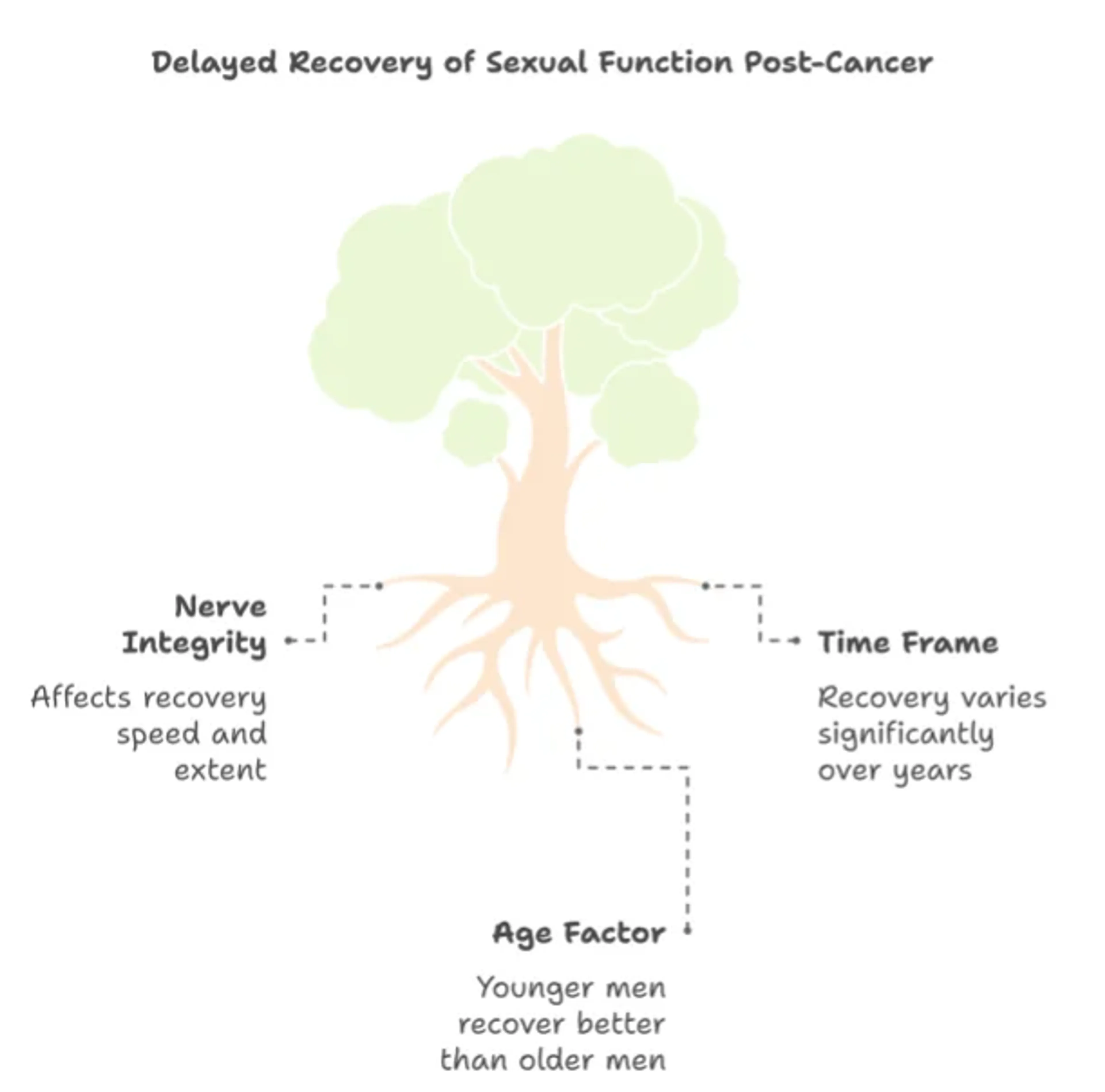
Sex after prostate cancer treatment can feel different, physically and emotionally. Worrying about erections, desire or your relationship is understandable. There are options for help, but recovery varies and no treatment can promise to restore your previous sexual function.
Understanding what has changed
Tell your cancer team, GP or specialist nurse what is bothering you. You do not need to wait until treatment has finished or try to deal with it alone. I can help you separate changes in erections, desire, orgasm and comfort, because they may need different approaches.
Erections, desire and orgasm
Prostate surgery, radiotherapy and hormone treatment can affect sex in different ways. Surgery can damage the nerves and blood supply involved in erections. Radiotherapy-related changes may develop gradually. Hormone treatment can reduce your interest in sex as well as making erections more difficult.
Recovery does not follow one timetable
Your erections before treatment, age, other health conditions, the treatment you had and whether nerves could be spared all matter. A general success rate cannot tell you what will happen to you.
After surgery, improvement can take months or sometimes a few years. Some people continue to need treatment to get an erection, and some do not recover their previous erections.
After radiotherapy, erection problems can appear or worsen later. A change after treatment deserves assessment; do not assume that you have missed your chance to ask for help.
You may still be able to have an orgasm even if you cannot get a firm erection. After removal of the prostate, you no longer ejaculate semen; this is often called a dry orgasm. Sensation and the experience of orgasm can also change.
What can help
Start with what you want from treatment: an erection firm enough for penetration, less discomfort, more desire, or feeling comfortable with touch again. These are different goals. Your cancer team can refer you for specialist help with sexual function.
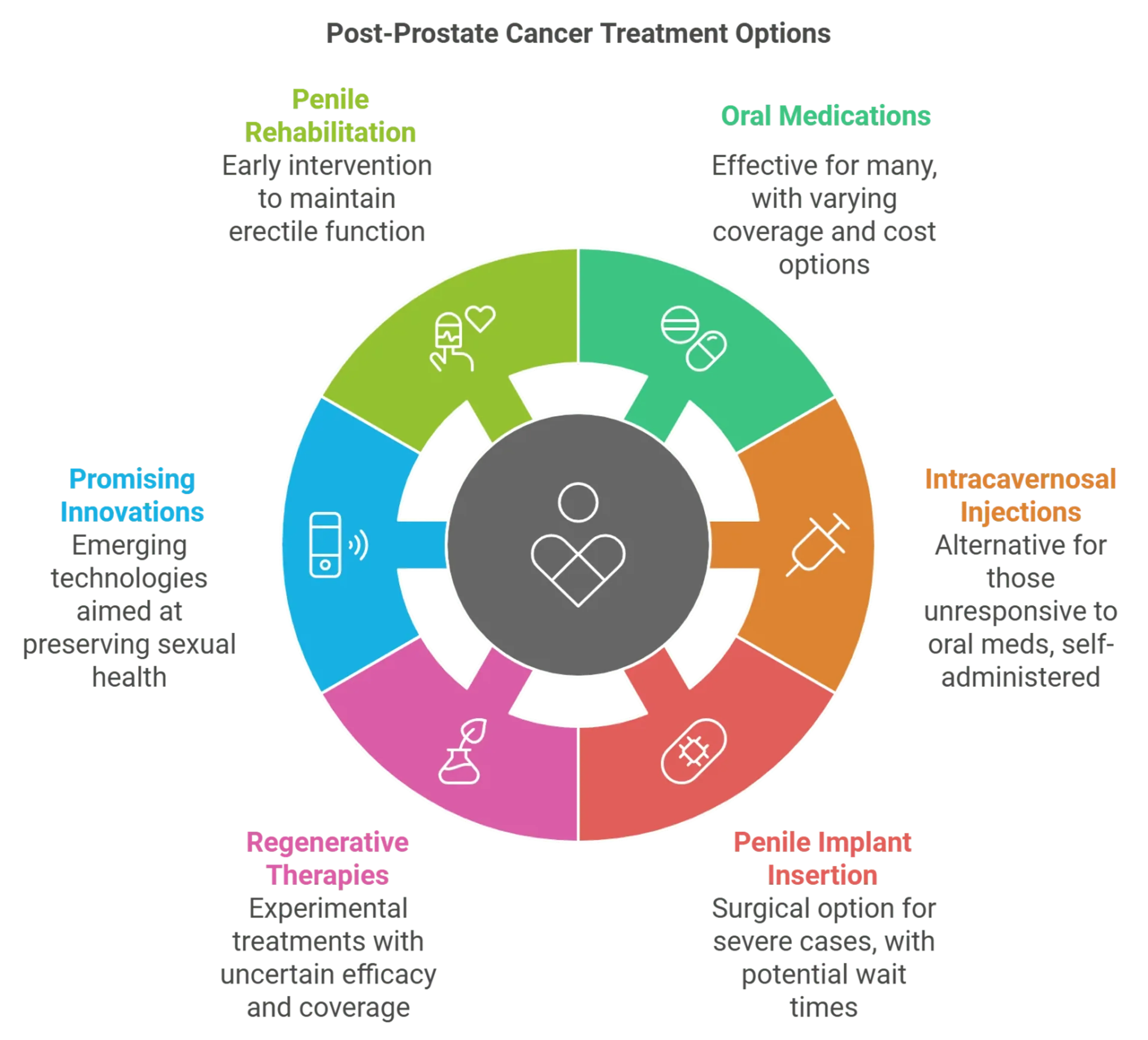
Treatments for erection problems
Tablets for erections
- Sildenafil, tadalafil and vardenafil can help blood flow to the penis when you are sexually stimulated. They do not work for everyone, and they do not guarantee that unassisted erections will recover.
- Do not take these tablets with nitrates such as GTN for angina, nicorandil, or poppers. Combining them can cause a dangerous drop in blood pressure. Tell the prescriber about every medicine or recreational drug you use.
- Your NHS cancer team or GP can explain local referral and prescribing arrangements. If you choose private care, check the consultation, treatment and follow-up costs before deciding.
- Ask how to use the prescribed treatment, what side effects to look out for and when to review the result. Do not change the dose or combine erection treatments without advice.
Penile injections
- An injection into the penis may be an option if tablets do not give an adequate erection or are unsuitable.
- Alprostadil is one medicine used for this. Your specialist should explain the expected benefit, risks and alternatives before you choose it.
- You need training before using injections at home. Follow the dose and instructions given by the prescribing team.
- An erection lasting four hours or longer needs immediate treatment at A&E. Follow any earlier urgent-help instructions from the team that prescribed your injections.
Penile implants
- A penile implant may be an option when other treatments have not met your needs or are unsuitable.
- An implant is a device placed inside the penis during surgery. It helps create rigidity for sex; it does not restore natural erections, desire or sensation.
- Implant surgery changes the erectile tissue permanently. Risks include infection and mechanical failure, which can mean further surgery. A specialist should explain these trade-offs with you.
Treatments being studied
- Platelet-rich plasma, or PRP, injections are not an established treatment for erection recovery after prostate cancer. European guidance restricts their use for erection problems to clinical trials.
- Stem-cell treatments are also experimental. Evidence is not strong enough to present them as a reliable way to restore erections.
- Be cautious about claims of nerve regrowth or guaranteed sexual recovery. Ask what evidence applies to people who have had your cancer treatment.
Vacuum devices
- A vacuum device draws blood into the penis. A constriction ring can help keep an erection long enough for sex.
- Ask a specialist or specialist nurse to show you how to use the device safely and check whether it suits you.
- Do not leave a constriction ring on for longer than 30 minutes. Follow the instructions supplied with your device.
Erection treatment and natural recovery
- Early discussion of erection treatment can help you stay sexually active while recovery is assessed. Tablets, injections or a vacuum device may help you get an assisted erection.
- NICE recommends offering erection tablets after treatment intended to cure prostate cancer, such as removal of the prostate or radiotherapy. Current European guidance says regular tablet-based rehabilitation has not been shown to increase the chance of recovering unassisted erections after prostate surgery. Helping you have sex now and restoring natural erections are different outcomes.
Looking after your general health
Movement and a healthy weight
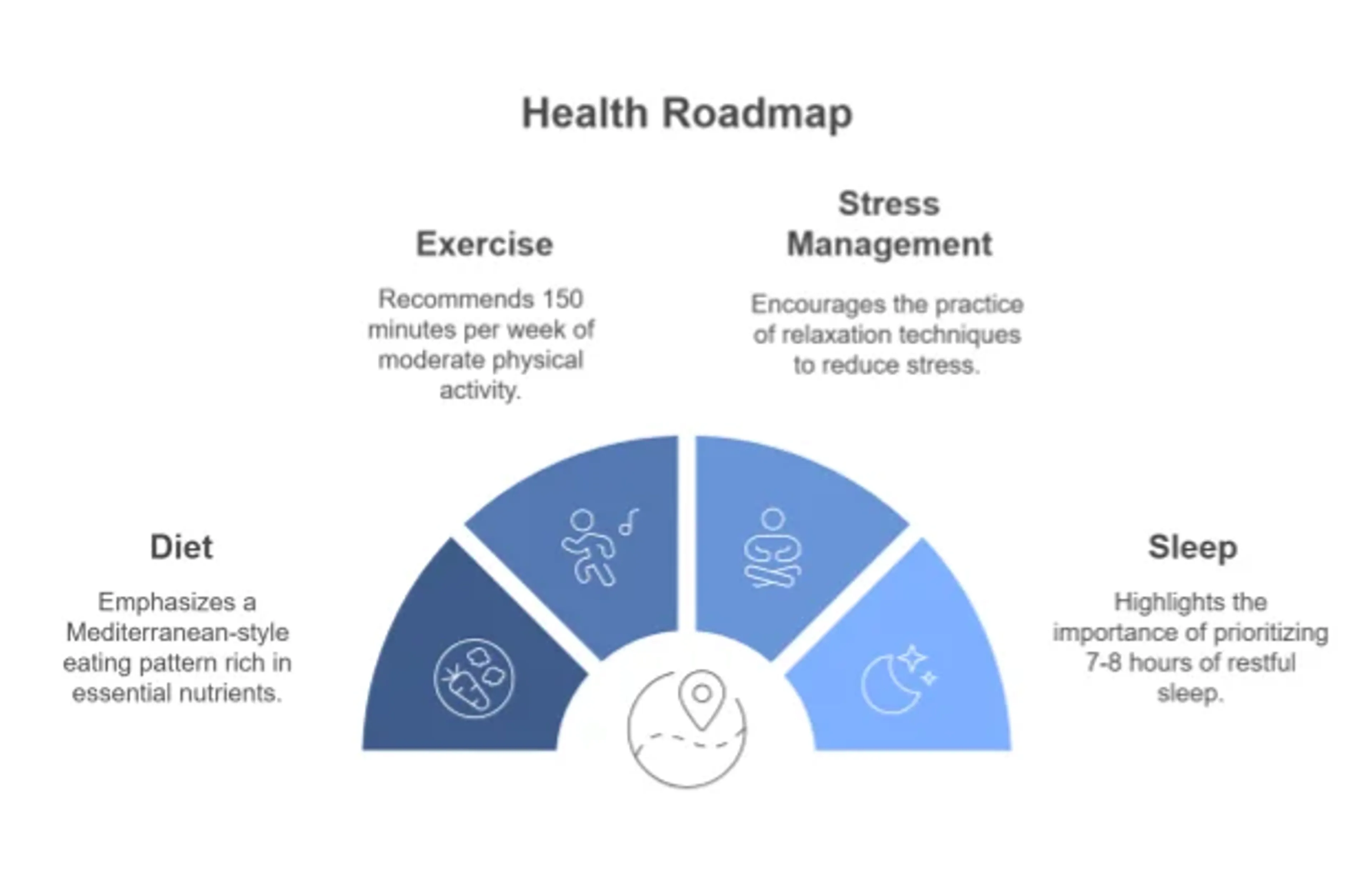
- Regular activity and a healthy weight support your general and cardiovascular health. Ask your cancer team what exercise is suitable while you recover; they are not a guarantee that erections will return.
Smoking and alcohol
- Stopping smoking supports your blood vessels and general health. Ask your GP or cancer team about help with stopping.
- Alcohol can make erections more difficult. If you drink, discuss sensible limits and any interactions with your medicines.
Food and supplements
A balanced diet supports your health during and after cancer treatment. It does not replace cancer care or treatment for erection problems.
Choose a balanced diet
- Include a variety of foods, including fruit, vegetables and sources of fibre. Your cancer team or a dietitian can help if treatment has affected your appetite, weight or digestion.
Omega-3 is not proven cancer protection
- Fish can form part of a healthy diet, but omega-3 foods or supplements should not be presented as a proven way to prevent prostate cancer progressing or returning.
Check supplements with your team
- There is not enough reliable evidence to recommend a particular food or supplement to control prostate cancer. Some supplements can interfere with treatment. Tell your cancer team what you take.
The emotional side matters too
Changes in sex can affect confidence, body image and relationships. You do not have to be in a relationship, or be having penetrative sex, for these concerns to deserve help.
Support for you
Psychosexual counselling
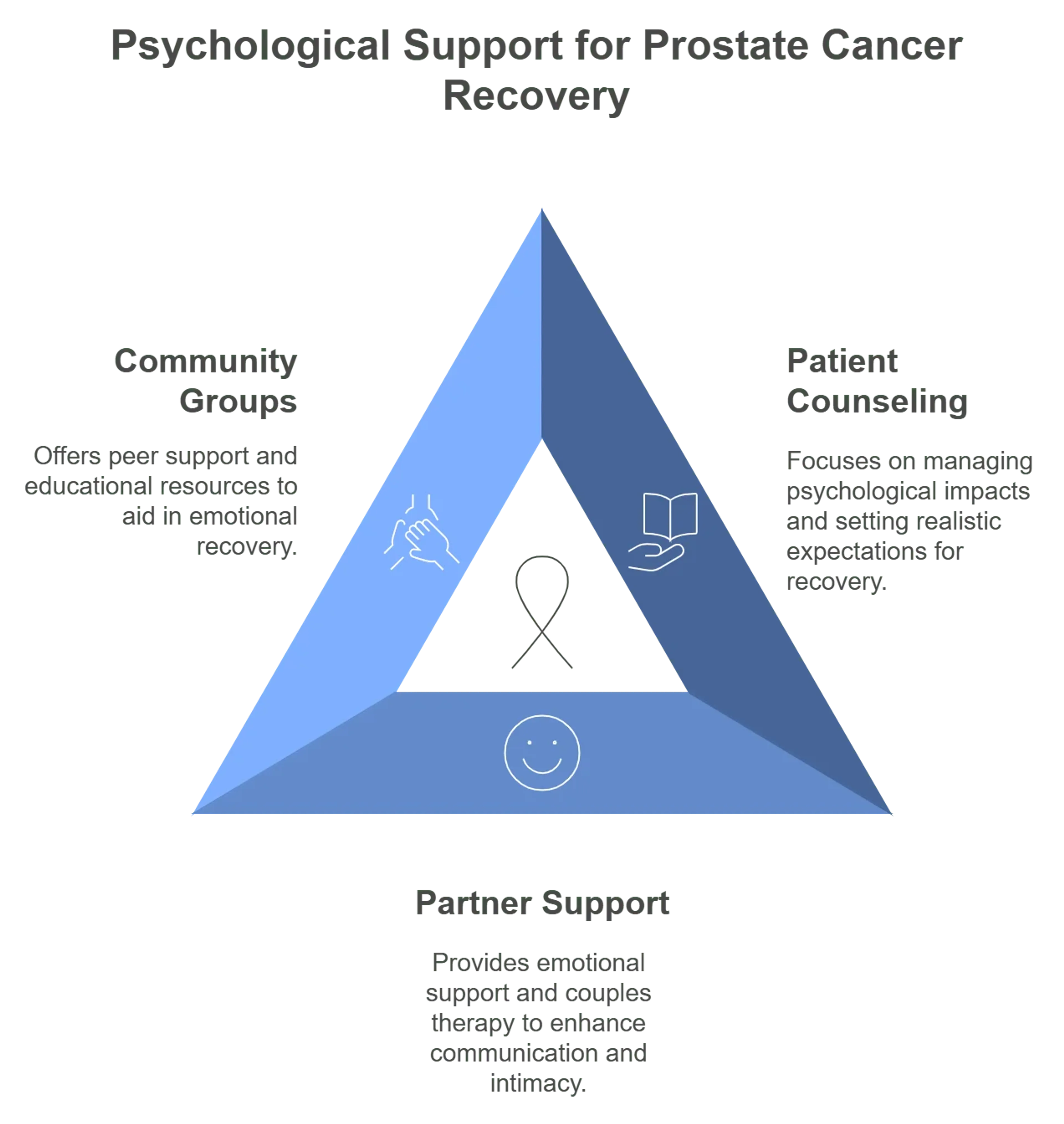
- Psychosexual counselling can help you talk through sexual worries, changes in confidence and the effect treatment has had on you.
- It can sit alongside medical treatment. Ask your cancer team or GP about local support and referral options.
Support for a partner, if you have one
Talking about what has changed
- A partner may have worries too. If you want to, include them in discussions about treatment and the kinds of touch or sex you both find comfortable.
Couples counselling
- Counselling can provide space to talk about changes in communication and intimacy without treating either person as the problem.
- You can also ask to speak to a clinician on your own. There is no requirement to involve a partner.
Support outside the consultation
You can ask for specialist information and support without having to work out every answer first.
Specialist support
- In the UK, Prostate Cancer UK offers sexual support and specialist nurses you can talk to about sex and relationships after treatment.
When you read information online, check who wrote it, what treatment it applies to and whether a claim is supported by evidence. Bring questions to your own cancer team.
How to start the conversation
Say what has changed for you
You can tell a clinician whether the main problem is getting an erection, keeping one, reduced desire, pain, orgasm changes or how you feel about your body. You do not need medical words to describe it.
If you are unsure where to start, write down the two or three changes that bother you most and bring that list to the appointment.
Talk about what you want
Your goal might be comfortable touch, an erection for penetration, less anxiety or a clearer explanation of what treatment has changed. It is useful to say that directly.
If you have a partner
You can discuss different ways of being close, take pressure off penetration and agree what feels comfortable. Stop if something hurts and ask for advice rather than pushing through it.
Before the appointment ends, check that you know the next step, who to contact with questions and when to review the plan.
Remote support
A remote appointment or support group may help you discuss concerns and plan the next step.
Video or telephone consultations
- Some discussions and follow-up can happen remotely. A physical examination or in-person teaching may still be needed.
Online support groups
- Other people's experiences can be useful, but their treatment and recovery may be different from yours. Check medical advice with your own team.
Fertility and ejaculation
Cancer treatment can affect fertility as well as sex. Raise this with your team before treatment when possible.
Sperm storage
- If you may want biological children, ask about storing sperm before treatment. This needs planning and may not be suitable in every situation.
Specialist advice
- If treatment has already started or finished, ask a fertility specialist what options may remain. Do not assume that erection recovery means fertility has also returned.
Reviewing the plan
A treatment that does not help enough is a reason to review the plan, not a reason to stop asking for help.
Follow-up
- Tell your team what you have tried, whether it helped, and any side effects or discomfort. They can review how you are using it and whether another option is appropriate.
Changing the approach
- Your needs may change over time. Discuss a different option if the current one does not fit your goals or your life.
Your next step
If sex has changed after prostate cancer treatment, tell your cancer team, GP or specialist nurse. Ask for an assessment of the changes that matter to you and a clear explanation of the options.
You do not have to decide on a treatment today. A useful first step is a conversation about what you want from sex and what help is available.