At the end of the day, my priority is your health and well-being. Whether you're dealing with a complex urological issue or seeking advice on a sensitive matter, I am here to provide the expert care you need with the compassion and understanding you deserve.
Pelvic Floor Physiotherapy in London: Specialist Assessment & Treatment
Specialist pelvic floor physiotherapy for men with urinary incontinence, pelvic pain, and post-surgical rehabilitation — evidence-based treatment in London.
Pelvic floor physiotherapy is a specialist form of physical therapy. It focuses on strengthening, rehabilitating, and retraining the pelvic floor (the group of muscles at the base of the pelvis that support the bladder, bowel and sexual function). These muscles can become weakened or dysfunctional following surgery, injury, or chronic conditions.
For men, pelvic floor physiotherapy is particularly valuable after prostate surgery. It helps manage urinary incontinence, chronic pelvic pain, and recovery from urological procedures. It is an evidence-based treatment that can significantly improve quality of life and restore confidence.
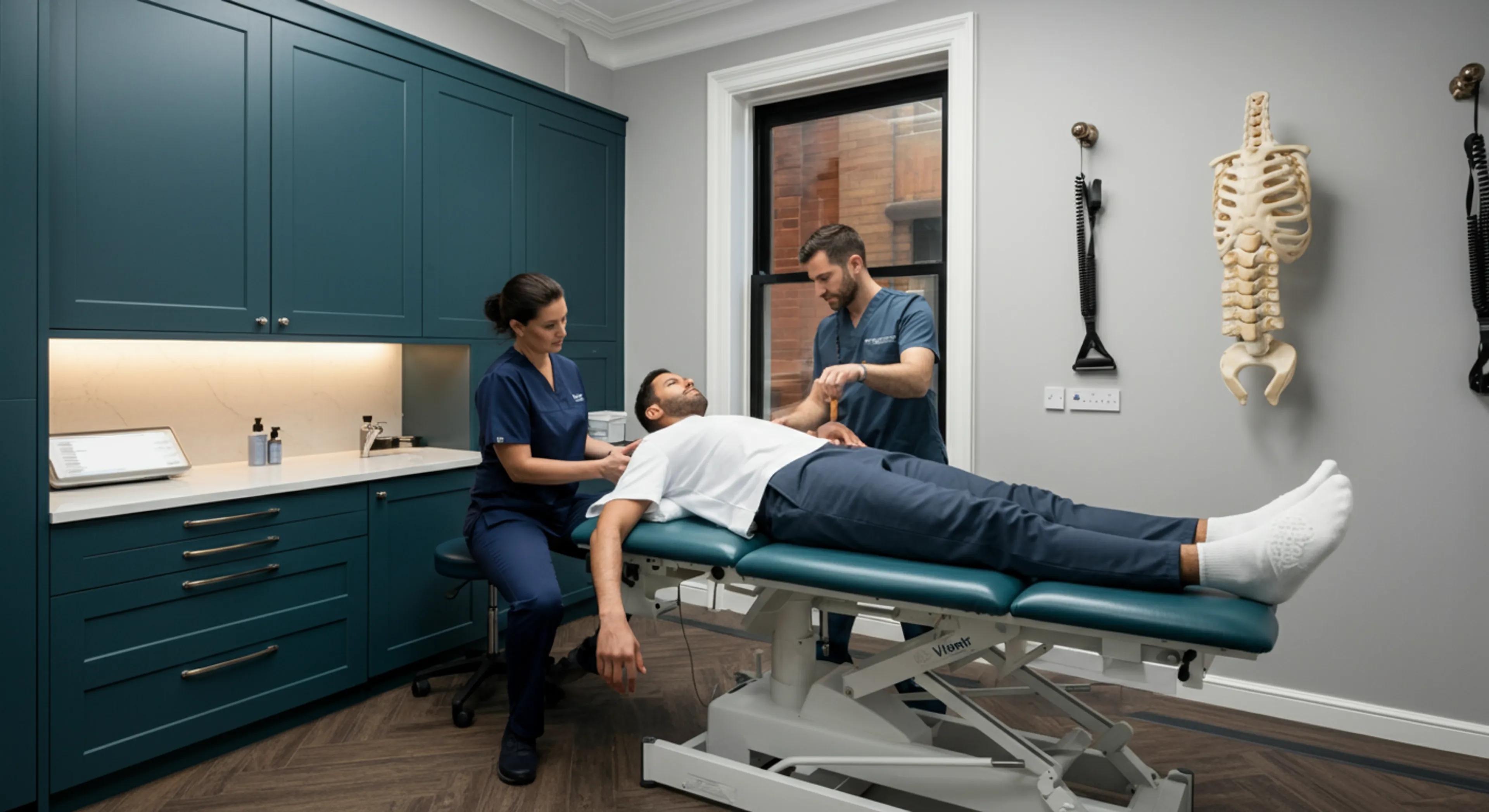
At GGOmed, our specialist physiotherapists provide one-to-one assessment and treatment in a private, professional environment. They tailor every programme to your individual needs and goals.
What Is Pelvic Floor Physiotherapy?
The pelvic floor is a group of muscles forming a supportive sling at the base of your pelvis. These muscles control urination, support pelvic organs, maintain continence, and contribute to sexual function. When they are weak, overactive, or poorly coordinated, you may experience leakage, urgency, pain, and reduced quality of life.
Pelvic floor physiotherapy uses targeted exercises, manual therapy, biofeedback (a technique that uses sensors to help you learn to control muscle activity), and behavioural strategies to restore normal function. The approach is highly individualised — your physiotherapist will assess your muscle function, identify areas of weakness or tension, and design a treatment plan tailored to your symptoms and goals.
The evidence base is strong, particularly for post-prostatectomy incontinence. Studies show that structured pelvic floor muscle training can significantly reduce leakage and accelerate recovery. NICE and the European Association of Urology both recommend it as a first-line treatment.
Pelvic Floor Physiotherapy at a Glance
Duration
Typically 6-12 sessions over 3-6 months, depending on your condition and progress
Session Length
45-60 minutes per session, with initial assessment lasting 60-90 minutes
Approach
One-to-one specialist assessment in a private, professional setting with personalised treatment plans
Evidence
Proven effective for incontinence, pelvic pain, and post-surgical rehabilitation — recommended by NICE guidelines
Introduction
Pelvic floor health is often associated with women's health, particularly pregnancy and childbirth. Men also have a pelvic floor, and it plays an equally important role in urinary control, bowel function, and sexual health. When the pelvic floor becomes weakened or dysfunctional — through surgery, ageing, chronic straining, or neurological conditions — the effects on daily life can be significant.
Many men are unaware that pelvic floor physiotherapy exists, or assume it is only relevant for women. This misconception can delay treatment and prolong symptoms that are often highly treatable. In reality, it is a cornerstone of urological rehabilitation — particularly following prostate surgery — and is increasingly recognised as an essential component of men's health care.
At GGOmed, we integrate pelvic floor physiotherapy into our broader urological care pathway. Whether you're preparing for surgery, recovering from a procedure, or managing a chronic condition, our specialist physiotherapists work closely with our urologists. Together, they deliver coordinated, evidence-based care that addresses both the medical and functional aspects of your condition.
Understanding the Pelvic Floor in Detail
The male pelvic floor consists of several layers of muscle and connective tissue that stretch from the pubic bone at the front to the tailbone at the back, and from side to side between the sitting bones. The main muscles include the levator ani group (pubococcygeus, puborectalis, and iliococcygeus) and the external anal sphincter.
These muscles have several critical functions: they support the pelvic organs (bladder, bowel, and prostate), maintain continence by providing closure pressure around the urethra and anus, assist with sexual function including erection and ejaculation, and work with the deep abdominal and back muscles to stabilise the spine and pelvis.
The pelvic floor muscles are unique in that they need to be both strong and flexible — able to contract powerfully to prevent leakage, but also able to relax fully to allow normal urination and bowel movements. Dysfunction can occur when muscles are too weak (leading to incontinence), too tight (causing pain or difficulty emptying), or poorly coordinated (resulting in urgency or incomplete emptying).
Urinary continence depends on the bladder's ability to store urine and the urethra's ability to remain closed until you are ready to empty. The pelvic floor muscles contribute to this by providing external compression around the urethra, particularly during activities that increase abdominal pressure such as coughing, sneezing, or lifting.
When you contract your pelvic floor muscles, they lift the pelvic organs slightly and increase closure pressure around the urethra. This 'guarding reflex' happens automatically in response to sudden pressure increases, but can be consciously controlled and strengthened through training. After prostate surgery, this mechanism is often disrupted, which is why targeted physiotherapy is so important for recovery.
The pelvic floor muscles play an important role in sexual function. The bulbospongiosus and ischiocavernosus muscles help maintain erection by compressing the veins that drain blood from the penis. Strong, well-coordinated pelvic floor muscles can contribute to firmer erections and better ejaculatory control.
Some research suggests that pelvic floor muscle training may help with erectile dysfunction, particularly when combined with lifestyle modifications and, where appropriate, medical treatments. While it is not a standalone cure for ED, strengthening these muscles can be a valuable component of a comprehensive treatment approach.
Several factors can contribute to pelvic floor dysfunction in men. Prostate surgery (particularly radical prostatectomy) is one of the most common causes, as the procedure can temporarily or permanently affect the muscles and nerves that control continence. Other surgical procedures including bladder surgery, bowel surgery, or hernia repair can also impact pelvic floor function.
Chronic straining due to constipation, chronic cough, or heavy lifting can weaken the pelvic floor over time. Neurological conditions such as multiple sclerosis, Parkinson's disease, or spinal cord injury can affect nerve signals to the pelvic floor. Ageing naturally leads to some loss of muscle tone, and obesity increases pressure on the pelvic floor. Chronic pelvic pain conditions can cause muscles to become overactive and tense, leading to pain and dysfunction.
When Is Pelvic Floor Physiotherapy Recommended?
Pelvic floor physiotherapy is recommended for a wide range of conditions affecting men's urological and pelvic health. The most common indication is post-prostatectomy incontinence, but it benefits many other conditions where pelvic floor function is compromised or symptoms affect quality of life.
Your urologist or GP may refer you for pelvic floor physiotherapy, or you can self-refer if you are experiencing symptoms. Early intervention is often more effective than waiting for symptoms to become severe, especially during surgical recovery.
Urinary incontinence is a common side effect following radical prostatectomy for prostate cancer. The surgery removes the prostate gland, which sits just below the bladder, and this can affect the sphincter mechanism that controls urine flow. Most men experience some degree of leakage immediately after catheter removal, ranging from occasional dribbling to more significant leakage with activity.
Pelvic floor physiotherapy is the gold-standard treatment for post-prostatectomy incontinence. Studies show that men who engage in supervised pelvic floor muscle training recover continence faster and achieve better long-term outcomes than those who do not. Ideally, physiotherapy should begin before surgery (prehabilitation) and continue in the weeks and months following catheter removal.
Treatment focuses on strengthening the external urethral sphincter and pelvic floor muscles, improving coordination and timing of muscle contractions, teaching strategies to prevent leakage during activities, and gradually progressing exercises as strength improves. Most men see significant improvement within 3-6 months, though recovery timelines vary.
Chronic pelvic pain syndrome (CPPS), sometimes called chronic prostatitis, causes persistent pain or discomfort in the pelvic region, often accompanied by urinary symptoms, sexual dysfunction, and reduced quality of life. The exact cause is often unclear, but pelvic floor muscle tension and dysfunction are frequently involved.
In CPPS, the pelvic floor muscles may become chronically tense or develop trigger points (a tight, tender spot within a muscle that refers pain to other areas). This tension can contribute to pain, urinary urgency and frequency, difficulty emptying the bladder, and pain during or after ejaculation.
Pelvic floor physiotherapy for CPPS focuses on relaxation rather than strengthening. Treatment may include manual therapy techniques to release muscle tension, biofeedback to help you relax overactive muscles, stretching and relaxation exercises, breathing techniques, and strategies to manage pain and reduce muscle guarding. Many men experience significant symptom improvement with this approach.
Overactive bladder symptoms — including sudden, strong urges to urinate, frequent urination (more than 8 times in 24 hours), and sometimes urge incontinence — can significantly impact daily life. While medication is often prescribed, pelvic floor physiotherapy can be an effective complementary or alternative treatment.
Physiotherapy for urgency and frequency includes bladder retraining techniques to gradually increase the time between toilet visits, urge suppression strategies using pelvic floor contractions to calm bladder signals, fluid and dietary advice to reduce bladder irritation, and pelvic floor muscle training to improve the ability to defer urination. The approach is behavioural as well as physical, helping you regain confidence and control.
If you are scheduled for prostate surgery or other pelvic surgery, starting pelvic floor physiotherapy before the operation can improve your outcomes. Prehabilitation — preparing your body for surgery — has been shown to reduce post-operative complications and speed recovery.
Pre-surgical physiotherapy involves learning to correctly identify and contract your pelvic floor muscles, building baseline strength and endurance, understanding what to expect after surgery, and establishing a relationship with your physiotherapist so post-operative care can begin immediately. Even a few sessions before surgery can make a significant difference to your recovery trajectory.
Beyond prostate surgery, pelvic floor physiotherapy can support recovery from other urological and pelvic procedures including bladder surgery, bowel surgery, hernia repair, and treatment for rectal prolapse. Any surgery in the pelvic region can affect pelvic floor function, and physiotherapy can help restore normal muscle coordination and prevent long-term complications.
The Pelvic Floor Physiotherapy Process: What to Expect
Understanding what happens during pelvic floor physiotherapy can help reduce anxiety and ensure you get the most from your treatment. The process is structured, professional, and entirely focused on your comfort and progress.
Your first appointment will be longer than subsequent sessions, as it includes a comprehensive assessment. Follow-up sessions focus on progressing your exercises, monitoring your symptoms, and adjusting your treatment plan as needed.
Your first appointment begins with a detailed discussion of your symptoms, medical history, and goals. Your physiotherapist will ask about your urinary and bowel habits, any pain or discomfort, sexual function, previous surgeries, medications, and how your symptoms affect your daily life. This conversation is confidential and conducted in a private, professional setting.
The physical assessment may include observation of your posture and movement, assessment of your abdominal and back muscles, and evaluation of your pelvic floor muscle function. This can be done externally through observation and palpation of the perineum (the area between the genitals and the anus), or may include an internal examination if appropriate and with your consent. Internal examination provides the most accurate assessment of muscle strength, coordination, and any areas of tension or weakness.
Your physiotherapist will explain everything before proceeding, ensure you are comfortable, and only conduct examinations that are clinically necessary. You can decline any aspect of the assessment, and alternative assessment methods can be used if you prefer.
Based on your assessment, your physiotherapist will develop a personalised treatment plan. This includes specific exercises tailored to your muscle function and symptoms, a home exercise programme with clear instructions, strategies for managing symptoms in daily life, and realistic goals and timelines for improvement.
The plan is collaborative — your physiotherapist will explain the rationale for each component and adjust the approach based on your feedback and progress. You will receive written or digital resources to support your home practice, and you can contact your physiotherapist between sessions if you have questions.
Pelvic floor exercises are the cornerstone of treatment. Your physiotherapist will teach you how to correctly contract and relax your pelvic floor muscles — this is more nuanced than simply 'squeezing', and many people initially perform the exercises incorrectly without realising it.
Exercises are progressed gradually, starting with basic contractions and building to more challenging variations including quick contractions for urgency control, sustained holds for endurance, functional exercises integrated into daily activities, and exercises in different positions. The key is consistency — regular daily practice is more effective than occasional intensive sessions.
Follow-up appointments typically last 45-60 minutes and are scheduled every 2-4 weeks initially, then less frequently as you progress. During these sessions, your physiotherapist will review your symptoms and progress, reassess your muscle function, progress your exercises, address any difficulties or questions, and adjust your treatment plan as needed.
Most people need 6-12 sessions over 3-6 months, though this varies depending on your condition and response to treatment. Some people achieve their goals more quickly, while others with complex or long-standing problems may benefit from longer-term support.
Success with pelvic floor physiotherapy depends largely on your commitment to home exercises. Your physiotherapist will provide a clear, manageable programme that fits into your daily routine. This typically involves 10-15 minutes of exercises, 2-3 times per day.
You will receive written instructions, and may be given access to digital resources or apps to support your practice. The exercises can be done discreetly anywhere — many people incorporate them into their daily routine, such as during their commute, while watching TV, or before getting out of bed in the morning.
Specialist Pelvic Floor Physiotherapy in London
Book your initial assessment with our specialist physiotherapists. We provide evidence-based treatment in a private, professional environment.
What Does Pelvic Floor Physiotherapy Address?
Pelvic floor physiotherapy addresses multiple aspects of muscle function and how they affect your symptoms. Treatment is tailored to your needs — whether that is building strength, improving coordination, relaxing overactive muscles, or managing pain.
Weak pelvic floor muscles cannot provide adequate support or closure pressure, leading to leakage, particularly during activities that increase abdominal pressure. Strengthening exercises focus on building both the power of individual contractions and the endurance to maintain muscle tone throughout the day.
Your physiotherapist will assess your baseline strength using a standardised grading system, then prescribe exercises that progressively challenge your muscles. This might include slow, sustained contractions to build endurance, quick, powerful contractions for urgency control, and functional exercises that integrate pelvic floor activation into daily movements.
Having strong muscles is only part of the picture — they also need to contract at the right time and in coordination with other muscle groups. The 'knack' technique involves contracting your pelvic floor just before and during activities that might cause leakage, such as coughing, sneezing, or lifting.
Your physiotherapist will teach you to anticipate situations where you need extra support and activate your pelvic floor proactively. This becomes automatic with practice, providing protection against leakage during daily activities. Coordination training also involves learning to relax your pelvic floor fully between contractions, which is essential for normal bladder and bowel emptying.
For some conditions, particularly chronic pelvic pain, the problem is not weakness but excessive tension. Overactive pelvic floor muscles can cause pain, difficulty urinating or having bowel movements, and sexual dysfunction. Learning to relax these muscles is as important as strengthening them.
Relaxation techniques include diaphragmatic breathing to reduce overall muscle tension, progressive muscle relaxation focusing on the pelvic floor, biofeedback to visualise muscle activity and learn to reduce it, and manual therapy techniques to release trigger points and muscle tightness. Many men find that learning to relax their pelvic floor significantly reduces pain and improves urinary symptoms.
Physiotherapy addresses bladder and bowel control through a combination of muscle training and behavioural strategies. For urinary incontinence, this includes strengthening the muscles that close the urethra, learning to suppress urgency using pelvic floor contractions, bladder retraining to gradually increase capacity, and fluid and dietary management to reduce irritation.
For bowel symptoms, physiotherapy can help with constipation through relaxation techniques and positioning advice, faecal urgency through pelvic floor strengthening and bowel retraining, and incomplete emptying through coordination exercises. The approach is holistic, considering how bladder and bowel function interact with pelvic floor health.
Chronic pelvic pain is complex and often involves multiple factors including muscle tension, nerve sensitisation, and psychological stress. Pelvic floor physiotherapy addresses the muscular component through manual therapy to release tight muscles and trigger points, exercises to improve muscle balance and reduce compensatory tension, and education about pain mechanisms and self-management strategies.
Your physiotherapist may also provide advice on posture, activity modification, and stress management, as these factors can all influence pelvic pain. While physiotherapy may not eliminate pain completely, many men experience significant improvement in pain intensity, frequency, and impact on daily life.
Your First Appointment: Preparation and Assessment
Knowing what to expect at your first pelvic floor physiotherapy appointment can help you feel more comfortable and prepared. The session is designed to be thorough yet sensitive, with your comfort and dignity as top priorities.
Bring any relevant medical records or referral letters from your GP or urologist, a list of current medications including over-the-counter supplements, details of previous surgeries or treatments, and any bladder or bowel diaries if you have been keeping them. Wear comfortable, loose-fitting clothing that is easy to remove if a physical examination is needed.
It can be helpful to prepare a list of questions or concerns you want to discuss. Many people find it useful to note down their symptoms, including when they occur, how often, and what makes them better or worse. This information helps your physiotherapist understand your situation more fully.
The assessment begins with a detailed conversation about your symptoms and medical history. Your physiotherapist will ask specific questions about your urinary and bowel habits, any pain or discomfort, sexual function, and how symptoms affect your daily life. These questions are asked in a professional, matter-of-fact way, and all information is confidential.
The physical examination may include observation of your posture and movement patterns, assessment of your abdominal and back muscles, and evaluation of your pelvic floor muscle function. Your physiotherapist will explain what they are going to do before each part of the examination and will only proceed with your consent.
Your privacy and dignity are paramount. All appointments take place in a private treatment room, and you will never be asked to undress more than necessary for the examination. If an internal examination is recommended, your physiotherapist will explain why it is helpful, what it involves, and will only proceed if you are comfortable.
You can decline any part of the assessment, and alternative methods can be used if you prefer. Many men feel anxious about pelvic floor physiotherapy, particularly if they have never had this type of treatment before. Your physiotherapist understands this and will work at a pace that feels comfortable for you.
Your initial assessment will take 60-90 minutes. This allows time for a thorough discussion of your symptoms and history, a comprehensive physical assessment, explanation of findings and treatment recommendations, and teaching of initial exercises. You will leave with a clear understanding of your condition and a plan for moving forward.
Follow-up appointments are typically 45-60 minutes. The longer initial session ensures your physiotherapist has all the information needed to provide effective, personalised treatment.
Treatment Techniques and Approaches
Pelvic floor physiotherapy uses a range of evidence-based techniques, tailored to your specific condition and goals. Your treatment plan will draw on one or more of these approaches, depending on what is most appropriate for your situation.
Pelvic floor muscle training is the foundation of most treatment programmes. It involves learning to correctly identify, contract, and relax your pelvic floor muscles, then progressively strengthening them through structured exercises. The key is quality over quantity — performing exercises correctly is more important than doing lots of repetitions.
Your physiotherapist will teach you different types of contractions: slow, sustained holds to build endurance (typically 5-10 seconds), quick, powerful contractions for urgency control (1-2 seconds), and functional contractions integrated into daily activities. A typical programme involves 3 sets of 8-12 repetitions, performed 2-3 times daily.
Research shows that supervised PFMT is significantly more effective than unsupervised exercises or written instructions alone. Regular follow-up with your physiotherapist ensures you are performing exercises correctly and progressing appropriately.
Biofeedback uses technology to provide real-time information about your muscle activity, helping you learn to contract and relax your pelvic floor more effectively. This can be particularly helpful if you are having difficulty identifying the correct muscles or if you tend to use compensatory muscles (such as your buttocks or thighs) instead.
Biofeedback can be provided using surface electrodes placed on the perineum, or through internal sensors if appropriate. The device displays your muscle activity on a screen, allowing you to see when you are contracting correctly and how strong your contractions are. This visual feedback helps you refine your technique and track your progress over time.
Electrical stimulation may be used in specific situations, particularly when muscles are very weak or when you are having difficulty contracting them voluntarily. The technique uses mild electrical currents to stimulate muscle contractions, helping to re-educate the muscles and build strength.
Electrical stimulation is not suitable for everyone and is typically used as an adjunct to exercise rather than a standalone treatment. Your physiotherapist will discuss whether this approach might be helpful for you. The sensation is usually described as a tingling or pulsing feeling, and the intensity is always controlled by you.
Manual therapy involves hands-on techniques to release muscle tension, improve tissue mobility, and reduce pain. For pelvic floor dysfunction, this may include external soft tissue massage of the lower abdomen, inner thighs, and buttocks, trigger point release for areas of muscle tightness, and myofascial (relating to the muscles and their surrounding connective tissue) release to improve tissue flexibility.
Internal manual therapy techniques may be used for chronic pelvic pain or muscle tension, but only with your explicit consent and comfort. These techniques can be highly effective for releasing trigger points and reducing pain, particularly when combined with relaxation exercises and home stretching programmes.
Physiotherapy is not just about exercises — it also involves education and behavioural strategies to support your recovery. This might include fluid management advice to reduce bladder irritation without causing dehydration, dietary guidance to avoid constipation and reduce urinary urgency, bladder retraining techniques to gradually increase capacity, and strategies for managing urgency in daily life.
Your physiotherapist will also provide advice on activity modification, lifting techniques, and posture to reduce strain on your pelvic floor. These lifestyle factors can significantly impact your symptoms and recovery, and addressing them is an important part of comprehensive treatment.
Evidence and Effectiveness
Pelvic floor physiotherapy is supported by a strong body of research evidence, particularly for post-prostatectomy incontinence. Understanding the evidence can help you make informed decisions about your treatment and set realistic expectations for outcomes.
For post-prostatectomy incontinence, studies show that 80-90% of men who engage in supervised pelvic floor muscle training achieve continence or significant improvement within 3-12 months. Men who start physiotherapy before surgery and continue afterwards tend to recover faster than those who begin treatment only after problems develop.
For chronic pelvic pain syndrome, research indicates that 50-70% of men experience significant pain reduction and symptom improvement with pelvic floor physiotherapy, particularly when combined with other treatments such as medication or psychological support. For overactive bladder symptoms, physiotherapy can reduce urgency episodes by 50-80% and improve quality of life scores significantly.
Improvement timelines vary depending on your condition, baseline muscle function, and commitment to home exercises. For post-surgical incontinence, many men notice some improvement within 4-6 weeks, with continued progress over 3-6 months. Maximum benefit is typically achieved by 12 months post-surgery.
For chronic pelvic pain, improvement may be more gradual, with initial changes in pain intensity or frequency within 6-8 weeks, and continued improvement over several months. For urgency and frequency symptoms, bladder retraining combined with pelvic floor exercises typically shows results within 6-12 weeks.
It is important to remember that pelvic floor rehabilitation is a gradual process. Muscles take time to strengthen, and neural pathways need time to adapt. Consistency with your home exercise programme is the single most important factor in achieving good outcomes.
Several factors can influence your response to pelvic floor physiotherapy. Positive factors include early intervention (starting treatment soon after symptoms develop or surgery), good baseline muscle function, adherence to home exercises, and absence of significant nerve damage. Factors that may slow progress include severe baseline incontinence, previous pelvic radiation therapy, neurological conditions affecting muscle control, and significant obesity.
However, even if you have factors that might slow progress, physiotherapy can still be beneficial. Your physiotherapist will work with you to optimise your treatment plan and set realistic goals based on your individual circumstances.
The benefits of pelvic floor physiotherapy extend beyond immediate symptom relief. Learning to properly activate and control your pelvic floor muscles provides long-term protection against future problems. Many men continue with maintenance exercises even after completing formal treatment, helping to preserve muscle function as they age.
Research shows that men who complete pelvic floor physiotherapy programmes have better long-term continence outcomes, improved quality of life, reduced need for incontinence products, and greater confidence in social and physical activities. The skills you learn during physiotherapy become lifelong tools for managing your pelvic health.
Frequently Asked Questions
It is natural to feel some apprehension about pelvic floor physiotherapy, particularly if you have never had this type of treatment before. However, most men find that their concerns quickly disappear once they meet their physiotherapist and understand the professional, respectful approach.
Your physiotherapist is a trained healthcare professional who specialises in pelvic health. They discuss these issues every day and will put you at ease. All examinations are conducted with your consent, in a private setting, and with your dignity as a priority. Many men report that their initial anxiety was unfounded and that they wish they had sought treatment sooner.
Most people need 6-12 sessions over 3-6 months, though this varies depending on your condition and progress. Your physiotherapist will give you a clearer estimate after your initial assessment. Sessions are typically scheduled every 2-4 weeks initially, then less frequently as you progress and become more independent with your exercises.
Some people achieve their goals more quickly, while others with complex or long-standing problems may benefit from longer-term support. Your treatment plan is flexible and will be adjusted based on your response and needs.
Internal examination provides the most accurate assessment of pelvic floor muscle function, but it is not always necessary. Your physiotherapist will discuss whether an internal examination would be helpful for your particular situation and will only proceed if you are comfortable with it.
If you prefer not to have an internal examination, alternative assessment methods can be used, including external observation and palpation, ultrasound imaging, or biofeedback with surface electrodes. While these methods may provide less detailed information, they can still guide effective treatment.
Yes — home exercises are an essential part of pelvic floor physiotherapy. Your physiotherapist will teach you exercises during your sessions and provide clear instructions for home practice. Success depends largely on your commitment to regular daily exercises between appointments.
The exercises are discreet and can be done anywhere — many people incorporate them into their daily routine. You will receive written or digital resources to support your practice, and you can contact your physiotherapist between sessions if you have questions or concerns.
Most people notice some improvement within 4-6 weeks of starting treatment, though this varies depending on your condition and baseline muscle function. Continued improvement typically occurs over 3-6 months, with maximum benefit achieved by 12 months for post-surgical conditions.
It is important to remember that pelvic floor rehabilitation is a gradual process. Muscles take time to strengthen, and neural pathways need time to adapt. Consistency with your home exercise programme is the single most important factor in achieving good outcomes. Your physiotherapist will help you track your progress and adjust your treatment plan as needed.
Combining Physiotherapy with Other Treatments
Pelvic floor physiotherapy is most effective when integrated with other treatments as part of a comprehensive care plan. At GGOmed, our physiotherapists work closely with our urologists to ensure coordinated, holistic care.
For some conditions, physiotherapy works best alongside medication. For example, men with overactive bladder may benefit from combining pelvic floor exercises with anticholinergic or beta-3 agonist medications. The physiotherapy addresses the muscular component while medication helps calm bladder overactivity.
For chronic pelvic pain, physiotherapy may be combined with pain medications, anti-inflammatory drugs, or medications that target nerve pain. Your urologist and physiotherapist will communicate to ensure your treatments are complementary and optimally timed.
Pelvic floor physiotherapy plays a crucial role in surgical care pathways. Pre-surgical physiotherapy (prehabilitation) prepares your muscles for surgery and establishes a baseline for post-operative comparison. This can improve surgical outcomes and speed recovery.
Post-surgical physiotherapy should ideally begin as soon as your surgeon gives clearance, often within days of catheter removal after prostate surgery. Early intervention can prevent complications and accelerate return to normal function. Your physiotherapist will coordinate with your surgical team to ensure treatment is appropriately timed and progressed.
Some men find that complementary approaches enhance their physiotherapy outcomes. These might include mindfulness or relaxation techniques to reduce muscle tension and pain, acupuncture for pain management, dietary modifications to support bladder and bowel health, and psychological support for managing the emotional impact of symptoms.
Your physiotherapist can advise on which complementary approaches might be helpful for your situation and can coordinate with other healthcare providers to ensure your care is integrated and effective.
Book Your Assessment
If you are experiencing urinary incontinence, pelvic pain, or other symptoms affecting your quality of life, pelvic floor physiotherapy may help. Our specialist physiotherapists provide evidence-based assessment and treatment in a private, professional environment in central London.
You can book directly online or contact us to discuss your needs. We accept self-referrals as well as referrals from GPs and specialists. Your initial assessment will give you a clear understanding of your condition and a personalised plan to help you achieve your goals.
Questions or feedback?
If you have questions about pelvic floor physiotherapy or would like to discuss whether it is right for you, please get in touch. Our team is here to help you understand your options and access the care you need.