What You Need to Know About Testicular Cancer
Testicular cancer is the most common cancer in young men, typically affecting those between the ages of 15 and 40, although it can occur at any age. The good news is that it's also one of the most curable forms of cancer, especially when detected early. Cure rates exceed 95% overall.
Risk Factors and Presentation:
Known risk factors include:
- Undescended testicle (cryptorchidism): Even if surgically corrected.
- Family history of testicular cancer.
- Previous testicular cancer in the other testicle.
- Certain genetic conditions (less common).
- Subfertility is also associated with a slightly increased risk.
The most common presentation is:
- A painless lump or swelling *within* the testicle itself.
- An increase in firmness or hardness of the testicle.
- A feeling of heaviness in the scrotum.
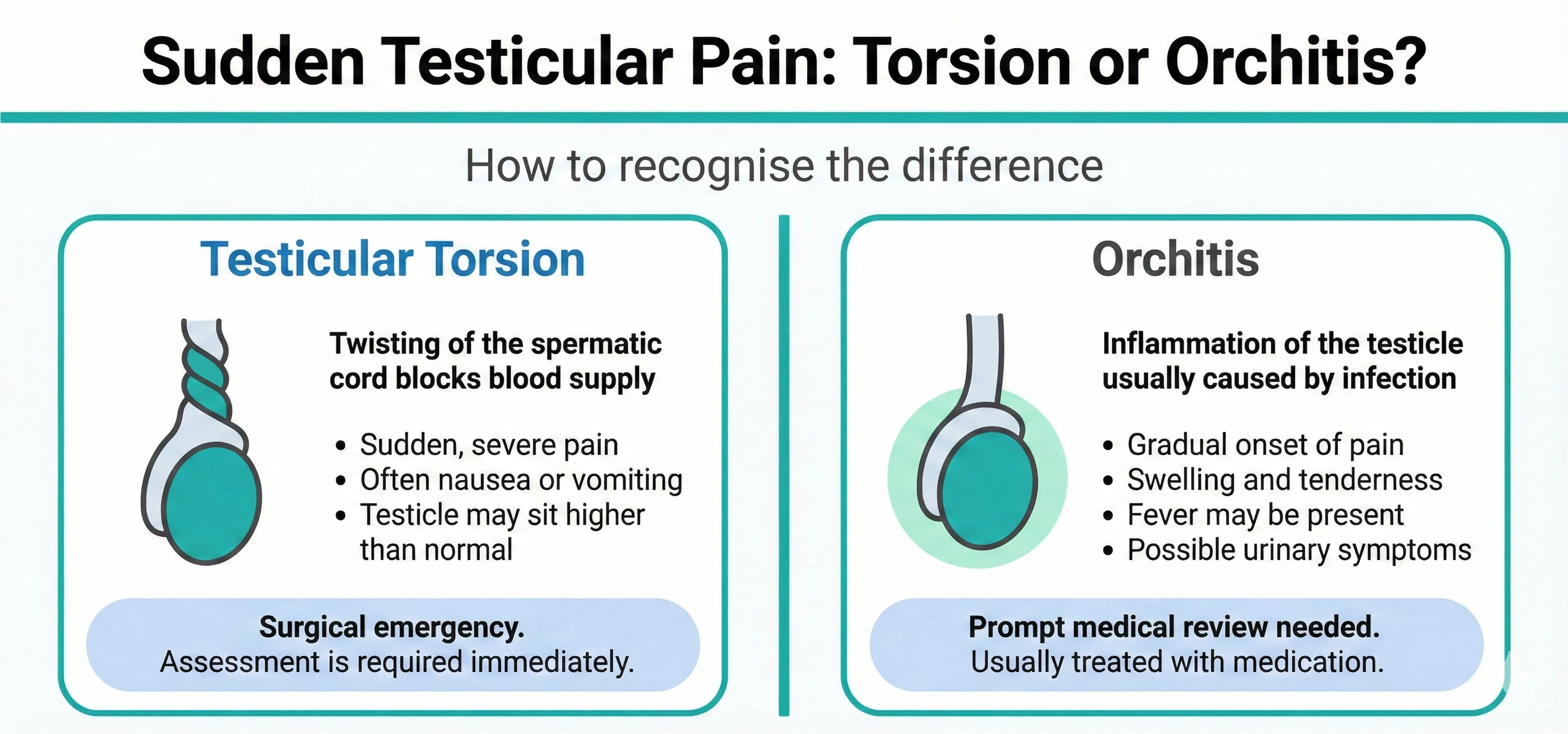
- Less commonly, dull ache, sharp pain, or symptoms from spread (metastasis) like back pain, cough, or swollen lymph nodes (rare at presentation).
Diagnosis and Why Ultrasound is Key:
If testicular cancer is suspected based on examination:
- Scrotal Ultrasound: This is the cornerstone investigation. It's highly accurate at distinguishing between lumps arising *within* the testicle (suspicious for cancer) and those outside it (like epididymal cysts or hydroceles, usually benign).
- Tumour Markers: Blood tests for specific proteins (Alpha-fetoprotein - AFP, human Chorionic Gonadotropin - hCG, Lactate Dehydrogenase - LDH) that can be elevated in certain types of testicular cancer. These help with diagnosis, staging, and monitoring treatment response.
- Staging Scans: If cancer is confirmed or highly suspected, CT scans of the chest, abdomen, and pelvis are usually performed to check if the cancer has spread (metastasised) to lymph nodes or other organs.
CRITICAL POINT: Biopsy through the scrotum is NOT done. If cancer is suspected, the standard procedure is removal of the entire testicle through the groin (inguinal orchidectomy) to prevent potential seeding of cancer cells into the scrotum.
Inguinal Orchidectomy: The Surgical Approach
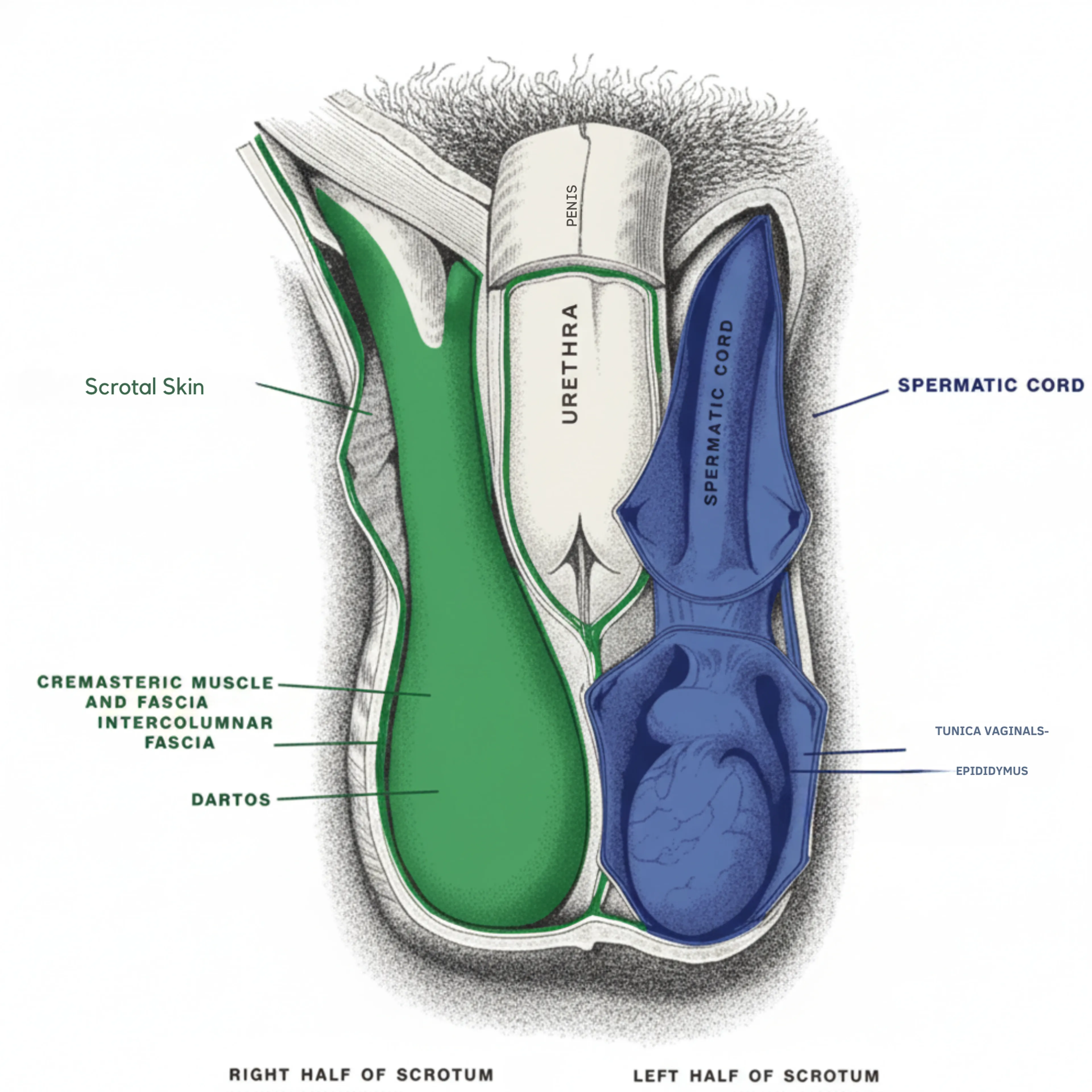
If investigations strongly suggest testicular cancer, the primary treatment is surgical removal of the affected testicle and spermatic cord. This procedure is called a radical inguinal orchidectomy.
- Performed under general anaesthesia.
- An incision is made in the groin (like a hernia repair incision), *not* on the scrotum.
- The spermatic cord is identified and clamped high up near the internal inguinal ring to control blood vessels and prevent tumour cell spread.
- The testicle and entire spermatic cord are removed through the groin incision.
- The tissue is sent to pathology for detailed analysis to confirm the cancer type and extent.
- At the time of surgery, insertion of a testicular prosthesis (artificial testicle) can often be performed through the same incision if desired for cosmetic reasons (discussed beforehand).
Life After Orchidectomy and Further Treatment:
Removal of one testicle generally does not affect sexual function or fertility significantly, as the remaining testicle usually produces enough testosterone and sperm. However, fertility preservation (sperm banking) is strongly recommended *before* orchidectomy and any subsequent treatments (like chemotherapy or radiotherapy), especially as subfertility can pre-exist.
Following surgery and confirmation of the cancer type and stage (based on pathology and staging scans), further management is decided by a specialist multidisciplinary team (MDT) and may involve:
- Surveillance: For early-stage cancers, close monitoring with regular blood tests, scans, and check-ups may be all that's needed.
- Chemotherapy: Highly effective for testicular cancer that has spread or for certain types/stages to reduce the risk of recurrence.
- Radiotherapy: Sometimes used for a specific type called seminoma that has spread to nearby lymph nodes.
- Further Surgery: Rarely, removal of lymph nodes at the back of the abdomen (Retroperitoneal Lymph Node Dissection - RPLND) might be required.
With timely diagnosis and appropriate treatment tailored by experts, the outlook for testicular cancer is excellent.